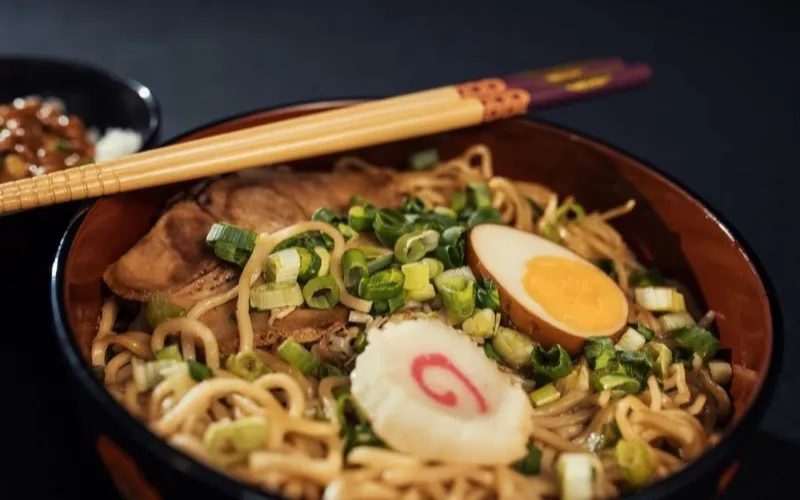
Hidden ramen spots in Tokyo you must try
@tastingtokyo
AI Summary
Six under-the-radar ramen shops across Shinjuku and Shibuya, with the dish to order at each and how to actually find them.
#tokyo#food#travel
Food & TravelMar 12
"What did I save about Tokyo?" is a better interface than a grid. Nemivo retrieves the saves that actually answer the question, reads them, and writes back an answer that cites each one.
In short
Ask is a question box over your own saves. Nemivo retrieves the handful of saves that bear on the question, gives only those few to a language model, and streams back an answer with a numbered citation on every claim. It never searches the web, so when the answer is not in what you saved, it says so instead of inventing one.
Nemivo
You saved “Why $9.99 works” three months ago. A 12-minute talk on anchoring and charm pricing. Your note says “use for the launch page”.
The order matters. A model that writes first and looks for sources afterwards is a model that invents them.
The intent is pulled out first: what you are asking about, and any period you mentioned. Relative dates like "last month" are resolved locally rather than taken from the model, so the range is never invented.
The same hybrid retrieval that powers search selects the top sources: four on fast, eight on balanced, sixteen on deep. Your whole library is never sent anywhere, only those few saves.
The model is given those sources and told to answer from them alone, citing each inline. The answer arrives token by token, so a deep question reads as it is being written.
Questions live in a conversation you can come back to, and any answer can be saved as a note with the sources it cited attached to it.
/ask is a page of its own in the app, built around the fact that the interesting questions take more than one turn.
Answers cite the saves they used as numbered references, and each one links back to the item so you can check it in one click.
Fast reads four sources, balanced eight, deep sixteen. More sources is a better answer and a slower one, so the choice is yours per question.
Threads are kept, so the follow-up question three days later still has the context of the first one.
Save an answer and it lands in Notes with the ids of the saves it cited, so the reasoning survives the conversation.
Each source carries the date it was saved, and time-scoped questions are told the retrieved set is the complete set for that period, so the answer lists exactly those and does not imply others.
There is no web search behind this. If the answer is not in what you saved, the honest answer is that it is not there.
A retrieval-grounded answer is only ever as good as what it retrieved, and pretending otherwise is how these things go wrong.
No web search, no outside sources, no general knowledge dressed up as your own. That is the point of it, and it is also the limit: a question about something you never saved has no answer here.
The sources handed to the model are what the pipeline already holds: titles, creators, tags, summaries, dates and links. A save the AI could not read well makes a thin source.
There is no per-question budget: ask as often as you like while your plan is active. It is a retrieval plus a model call, so it is the first thing to go quiet if a trial ends without a subscription, along with the rest of the AI.
An answer is built from the saves, not from the notes you wrote on them. Notes are searchable on their own page, and folding them into the retrieval is not something we have done yet.
The long version, including what is stored and where the AI sits, is on how it works.
Every source in an answer is a summary the enrichment step wrote and a vector the embedding step stored. Ask is what those two steps were for.
No tiers to weigh up and no limits to plan around: the trial is the whole product, and Pro is the same thing that keeps running. Your library stays readable and exportable either way.
Built for people who save content every day.
Also included
No credit card · Everything included · Cancel anytime
Your library and your exports stay yours either way · Secure checkout by Polar
No. Your library is never sent anywhere as a whole. A question retrieves a handful of saves, and only those few are given to the model, with an instruction to answer from them alone and cite them.
Want the mechanism and the limits in full? Read how it works.
Nemivo reads the caption on everything you save, writes the summary, adds the tags and files it away. Months later you ask for it in your own words.
No credit card · Everything included · Cancel anytime