Hidden ramen spots in Tokyo you must try
@tastingtokyo
AI Summary
Six under-the-radar ramen shops across Shinjuku and Shibuya, with the dish to order at each and how to actually find them.
#tokyo#food#travel
Food & TravelMar 12
Nobody remembers the title. They remember what it was about. Nemivo runs three retrievers over your library at once, meaning included, and fuses them into one ranking, so half-remembered is enough.
In short
Semantic search in Nemivo finds a save by what it means rather than by the words it contains. Every save the AI has read is stored as a vector, and a search runs an exact-match tier, a keyword tier and a meaning tier at once, fusing the rankings, so “that video about pricing psychology” finds a talk whose title never used those words.
A small sample library, searched the way you actually remember things: by meaning, not by keyword.
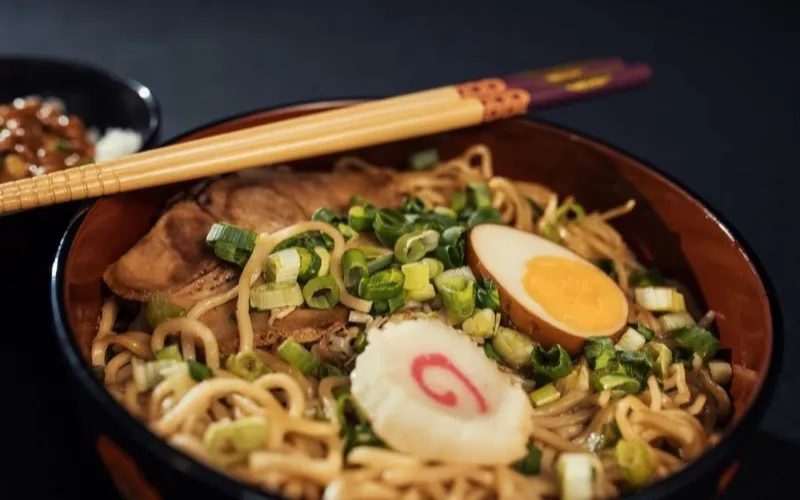
Hidden ramen spots in Tokyo you must try
@tastingtokyo
Six under-the-radar ramen shops across Shinjuku and Shibuya, with the dish to order at each and how to actually find them.
Async Python: the complete beginner course
CoreDump
A 90-minute walkthrough of asyncio: event loops, coroutines, tasks, and the mistakes every beginner makes.
How I consistently find dirt-cheap flights
r/travel
Error fares, positioning flights and the three fare-alert tools that actually work, with the exact setup.
The best films you’ve never heard of: a thread
@cinemaghost
25 overlooked films from the last decade, each with one line on why it deserves your evening.
vasilev/css-layout-patterns
Andrei Vasilev
30 modern CSS layout patterns with copy-paste code: grid, container queries, subgrid, and when to use each.
Pack 2 weeks into a carry-on
@minimalmiles
A rolling-and-cube system that fits 14 days of clothes into one carry-on, with the exact fold shown twice.
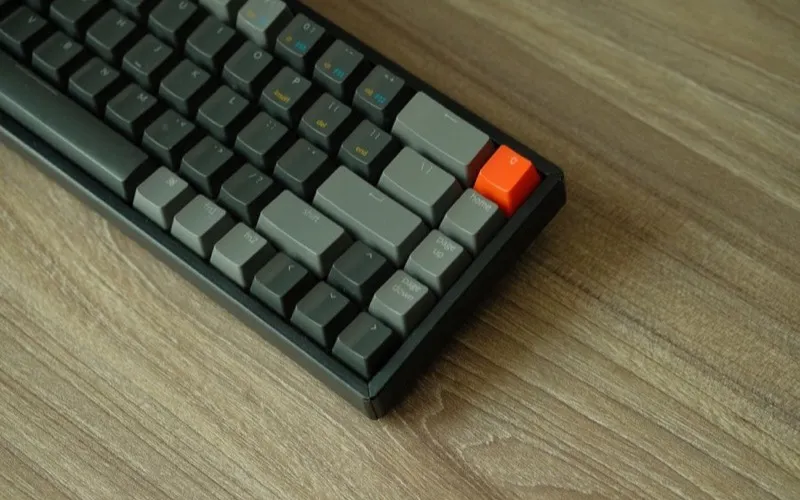
My endgame 65% mechanical keyboard build
r/MechanicalKeyboards
Full build sheet (board, switches, lube, mods) and what actually made the difference in sound.
Banking app onboarding concept
Lena Fischer
A four-screen onboarding flow with soft gradients and restrained motion. A great reference for progressive disclosure.
Meaning-only search misses the URL you just pasted. Keyword-only search misses everything you cannot spell. So neither of them runs alone.
Once the AI has read an item, its platform, title, description, creator, summary and tags are embedded into a vector stored beside it. The vector never leaves the database and never appears in an API response or an export.
The words you typed become a vector on the same scale, briefly cached so a repeated search is instant. If that step is slow or unavailable, the search quietly degrades to keyword-only rather than failing.
An exact tier for a pasted URL, an exact handle or an exact title; a keyword tier over titles, descriptions, creators, summaries and tags; and the meaning tier over the vectors. Each returns its own ranked candidates.
Reciprocal rank fusion merges the keyword and meaning rankings, so an item both agree on rises above one that only one of them liked. Exact matches are pinned above the fused list, because someone who pastes a link wants that item back.
Search is a retrieval problem, not a magic trick, and it behaves in ways worth knowing.
Title, description, creator name and handle, the AI summary and the AI tags. A title match ranks above a summary match, which ranks above a creator match.
Paste a URL, an exact handle or an exact title and that item is pinned to the top, ahead of everything the ranking produced.
Platform, collection, tag, media type and date narrow the candidates first, so a filtered search ranks within what you asked for rather than around it.
The same vectors power "more like this" on an item, which is how you get from one save you remembered to the four beside it that you did not.
Searching is cheap retrieval, so nothing is counted against you for doing it: meaning-based search is unlimited while your plan is active. Keyword search is never limited at all, on any account, including one whose trial has ended.
Every retrieval filters by your user id as a bound parameter in the query itself, not as a check afterwards. There is no code path that ranks across two libraries.
Three of these are consequences of how retrieval works, and one is simply not built yet.
The vector is written after the AI has read the item. In the minute between saving and enrichment, that item is findable by its words, just not yet by its meaning.
Item search reads the save, not the note you attached to it. Notes have their own search on the Notes page. Bringing them into this ranking is a change we have not made yet, and we would rather say so than let you assume.
Meaning is derived from words. A post with no caption, no title and no summary has very little for either retriever to match on, whatever it shows on screen.
Search hands you the saves. If you want a written answer built out of several of them, with citations back to each, that is Ask, and it is a different button.
The long version, including what is stored and where the AI sits, is on how it works.
The same retrieval runs underneath both. Search hands you a ranked library; Ask takes the top of that ranking, reads it, and writes you an answer that cites the saves it used.
No tiers to weigh up and no limits to plan around: the trial is the whole product, and Pro is the same thing that keeps running. Your library stays readable and exportable either way.
Built for people who save content every day.
Also included
No credit card · Everything included · Cancel anytime
Your library and your exports stay yours either way · Secure checkout by Polar
That the search compares meaning rather than spelling. Your query and each save are turned into vectors, and closeness between them is what ranks. It is why "that ramen place in Shinjuku" finds a post that never used the word ramen.
Want the mechanism and the limits in full? Read how it works.
Nemivo reads the caption on everything you save, writes the summary, adds the tags and files it away. Months later you ask for it in your own words.
No credit card · Everything included · Cancel anytime